Guide
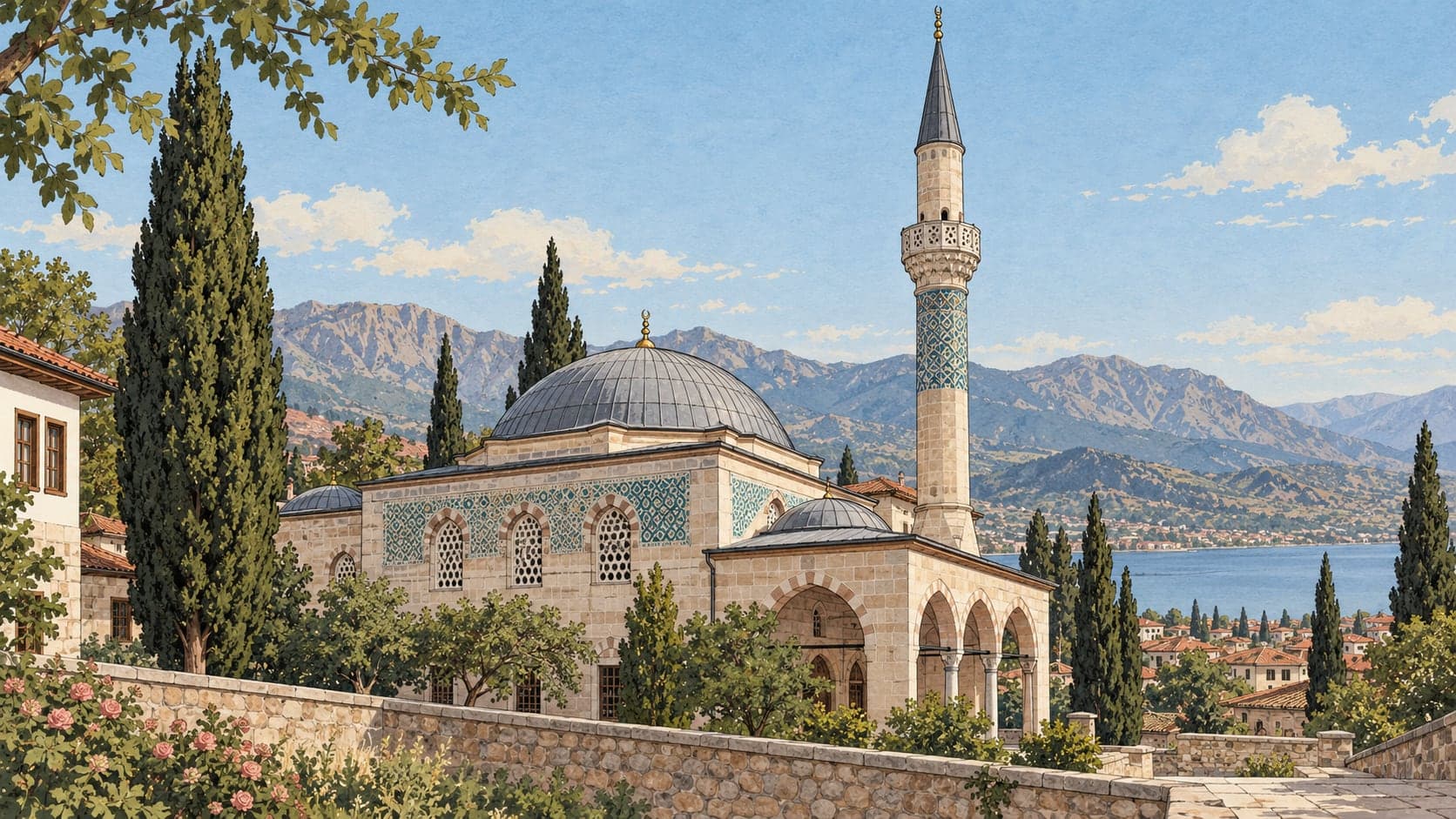
The mosque in the village of Yılanlı in the Aksu district of Isparta was built in 1809 by Yılanlıoğlu Şeyh Ali. It is rectangular, built of cut and rubble stone under a timber roof; it was repaired in recent years and the roof tiled at that time. The minaret is stone.
Two inscriptions over the entrance give two dates that do not agree: the Turkish one reads 1810 and the original Ottoman one gives the Hijri year 1225.
The porch for latecomers on the north is rectangular with a wooden ceiling. Three window frames are set asymmetrically in its front wall and three small ones above. A door from the porch leads up to the women's gallery and to the minaret.
Inside, four wooden columns carry the rectangular prayer hall. The ceiling is wooden with star patterns at the centre. The mihrab is original and has been painted over; the minbar, the preacher's chair and the women's gallery are wooden and new. There are four rectangular windows in each of the east and west walls and three aluminium-framed ones on the south. The minaret stands to the right of the building and carries turquoise tiles.
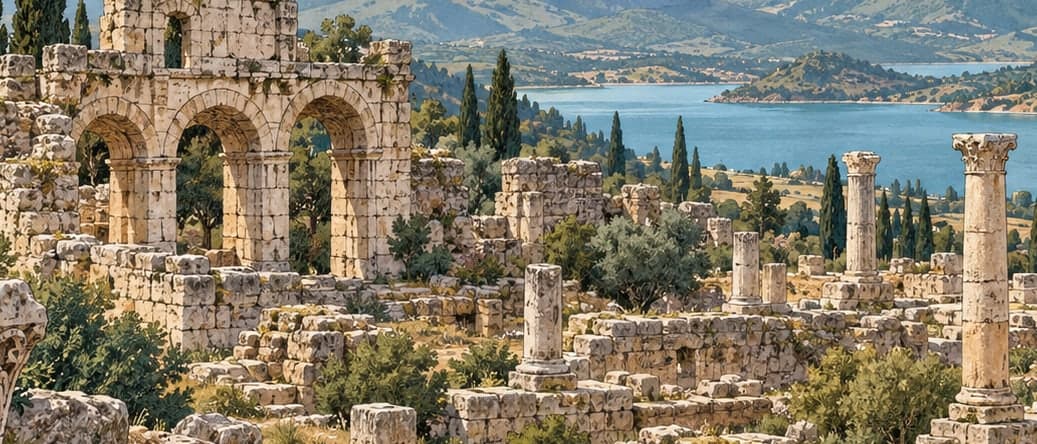
Reused material from the Roman period was built into the mosque, some of it inscribed. In the garden are places for ablution, a fountain and lavatories.