Guide
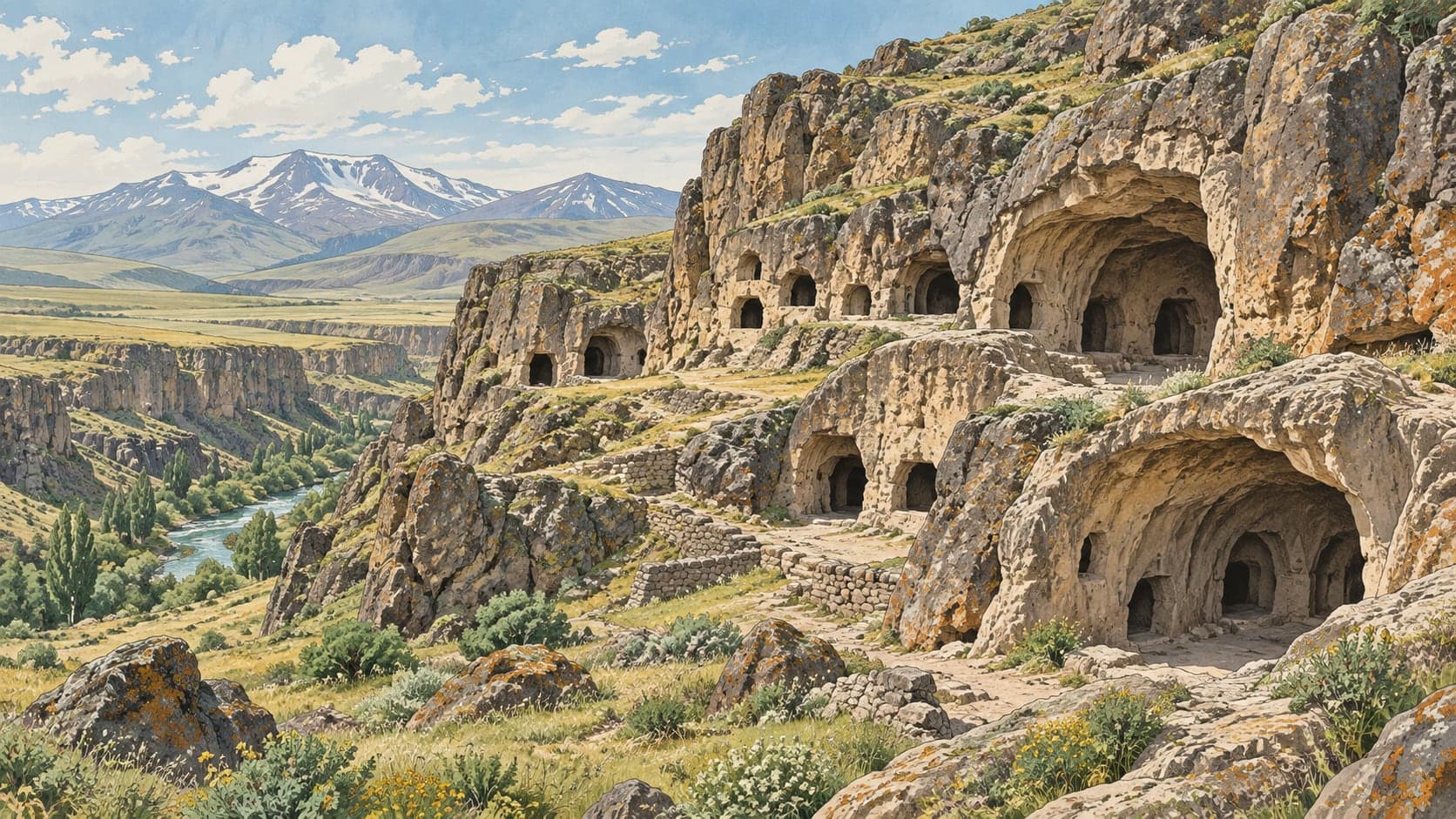
The cliffs around Ani are formed of soft tuff below and hard basalt above, and into that tuff, on the slopes of the valleys that enclose the city on three sides, a great many chapels, burial chambers, stores, dwellings, dovecotes and other rooms were cut. They are registered as protected cultural property. Some are linked to one another by internal stairs; some have more than one storey, reached by stairs. The fronts of most of the rooms are known to have been closed in the past with rubble stone or timber.
The caves are scattered along the cliffs but cluster particularly on both sides of the Alaca valley, west of the city. Those around the Bostanlar stream are known to have been lived in as late as the 1950s. The dovecotes cut into the rock nearby are the detail worth looking for: their workmanship is fine, and although their plans vary with the position and size of the rock, each contains small rectangular chambers of equal size — which suggests the craftsmen of Ani made them to a purpose, and has raised the idea of a postal service worked by pigeons. One caution about the official listing: the description is entirely about the caves at Ani, while the address field on the same page gives Camuslu village in the Kağızman district, some distance away.