Guide
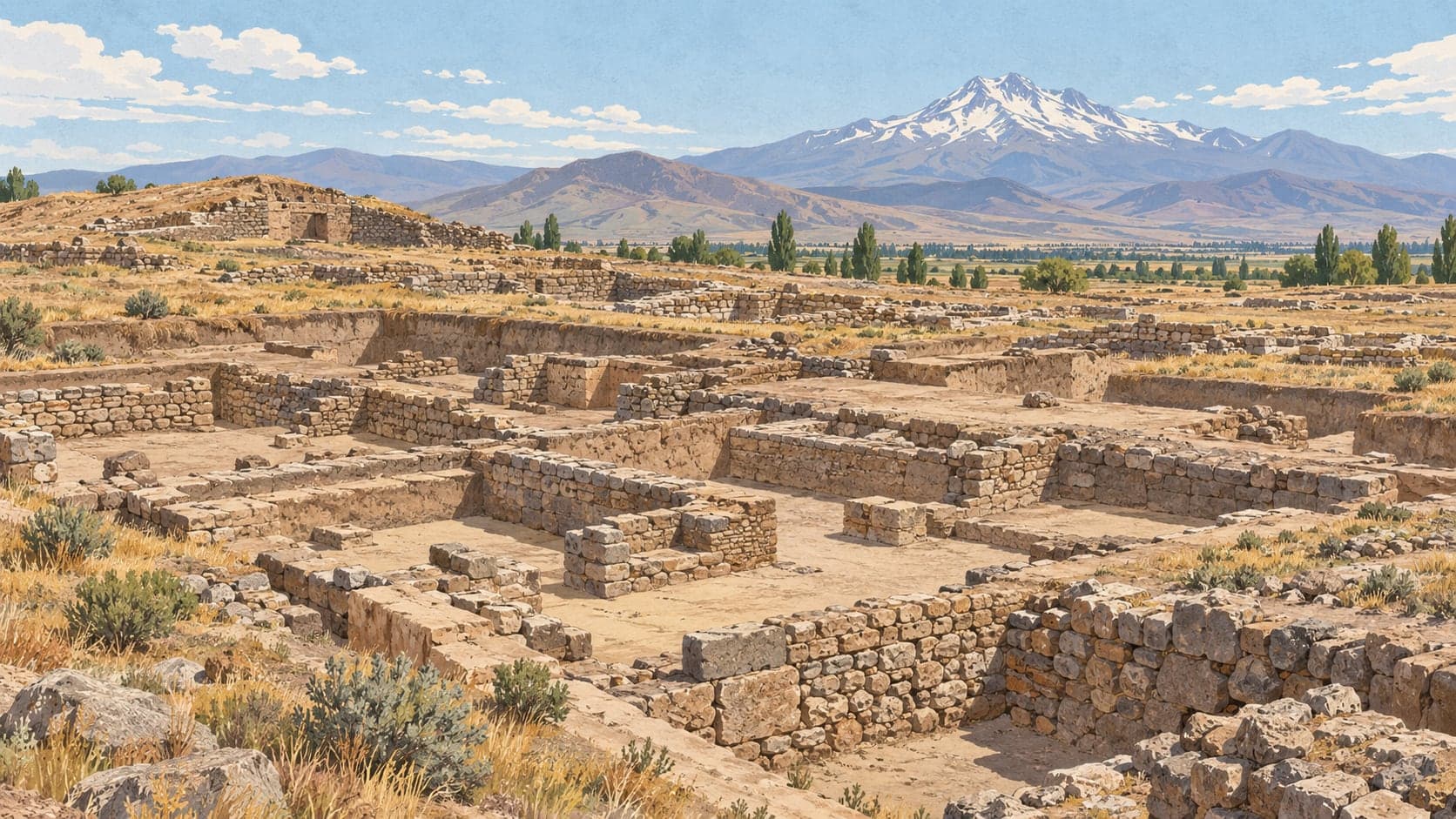
Kültepe lies at the foot of Erciyes at the eastern edge of the Kayseri plain. In the 2nd millennium BC it was the centre of the kingdom of Kanesh and the chief city of the Assyrian trading colony network — the Ministry calls it Anatolia's oldest known kingdom and the world's first organised commercial centre. Its claim on a visitor's attention is less architectural than documentary: this is where the earliest written tablets found in Anatolia came from.
The cuneiform records call the place Kanesh or Nesha. The modern name has been attached to it since 1871, when the cuneiform documents known as the Cappadocian tablets first surfaced and began scattering into museums and the antiquities trade. The site held its strategic position on the trade routes for centuries. The Assyrians' great trading colonies were called karum, and the karum at Kültepe was the head of the system, directing the others. It was located in 1925.
The tablets are mostly economic — letters, bonds, seals and contracts that set out the political and legal relations of the period, and with them a great deal of information about the history and geography of the age. In 2015 the Kültepe tablets were inscribed on the UNESCO Memory of the World register, a listing that covers the documents rather than the site. Excavation has run here since 1948 and has produced material from the Assyrian, late Hittite, Hellenistic, Roman, Persian and Tabal periods; the finds are displayed chiefly in the Kayseri Archaeological Museum, and also in the Museum of Anatolian Civilizations in Ankara and the İstanbul Archaeological Museums.
The site is 24 kilometres from the centre of Kayseri. Without a car, the way there is to take a minibus or bus from the eastern garage heading towards Sivas — anything serving Bünyan, Sarıoğlan or Gemerek — get off at the Kültepe junction, and walk the remaining two kilometres.