Guide
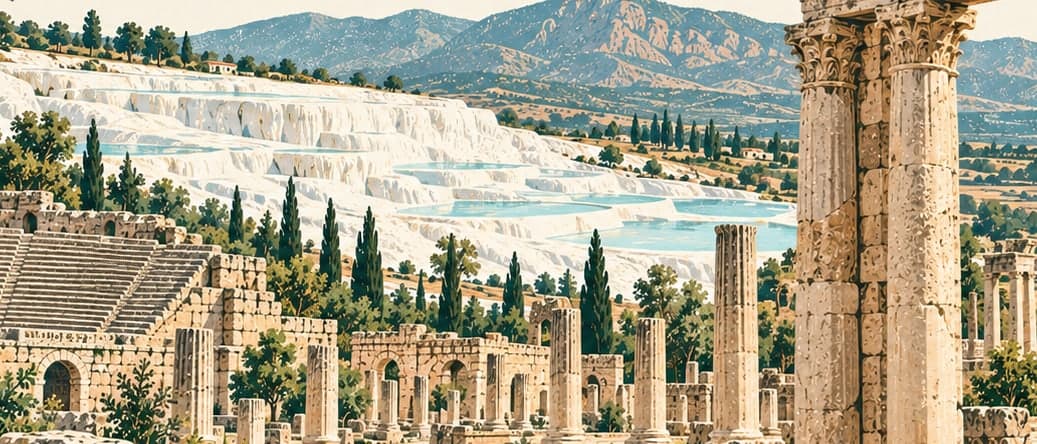
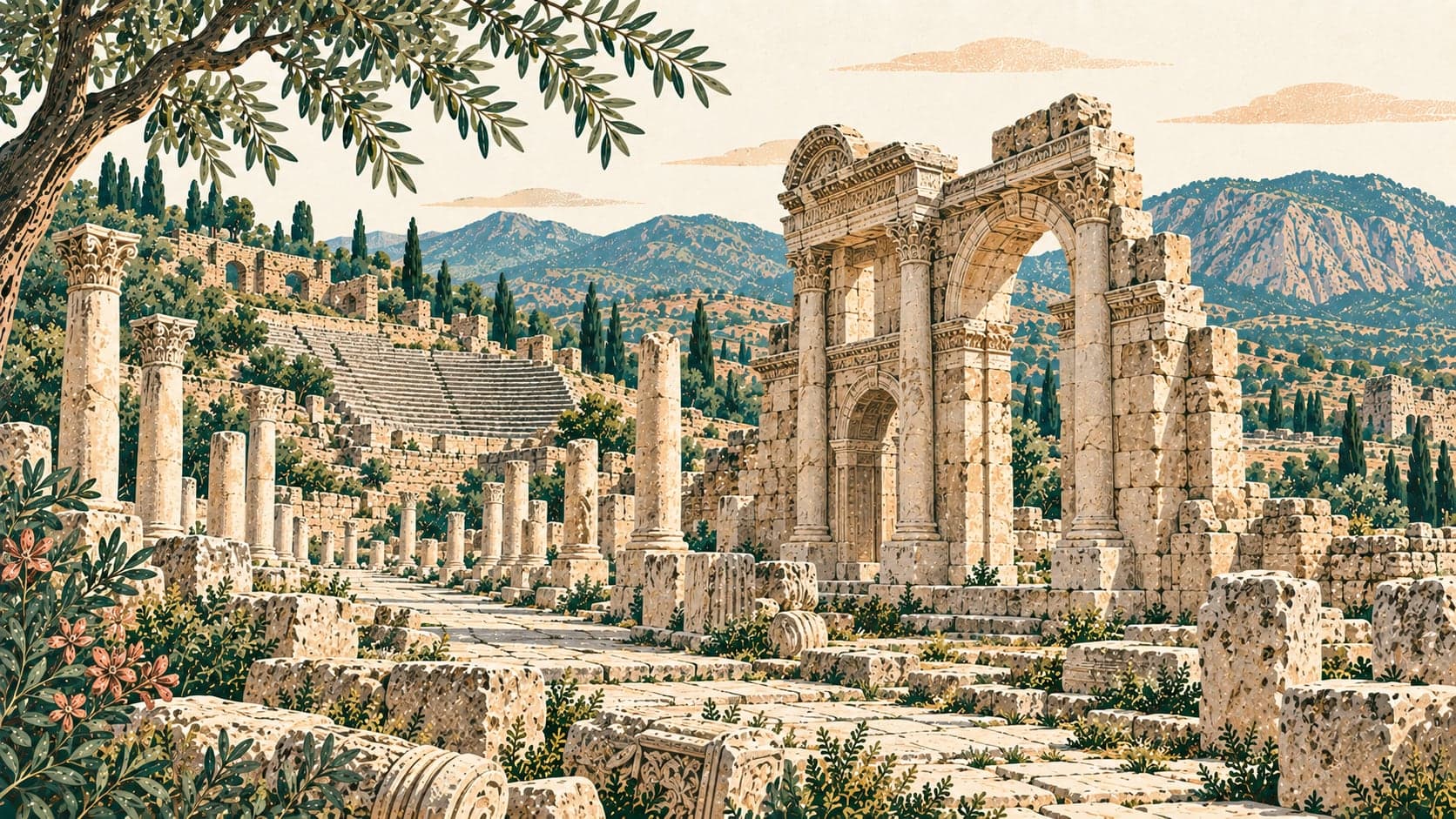
The ancient city of Herakleia Salbace lies within the bounds of the village of Vakıf in the Tavas district of Denizli, and part of the site is covered by the village today. It stands at the north-eastern end of the Tabae plain, on the skirts of the Salbakos range, today Babadağ.
The territory of the city bordered that of Aphrodisias and was bounded by the small river Timelos. For that reason Timelos is the river god of both cities and appears on the Roman imperial coins of each. The city's name appears on its coins as Herakleoton; as the name shows, it was founded in the name of the demigod hero Herakles.
Because the site has never been excavated, when the city was founded is not known exactly. The earliest coins found here go back no further than the first century BC, which points to a founding in the Hellenistic period.
Lying within Caria in antiquity, Herakleia Salbace belonged before the Roman period to the conventus of Alabanda, and under Rome to the administrative district of Aphrodisias. In the Byzantine period, in the fifth century AD, the city was ringed with a wall as the other cities of the region were. After the Byzantines, from the twelfth century onwards, the region passed into Turkish hands.
The Roman coins of the city name a priest of Herakleia in the time of the emperor Nero, along with titles such as stephanephoros, gymnasiarch, boule and prytaneion, and these titles are still found on coins of the Antonine period in the second century AD. The coins carry a bearded Herakles and Serapis, and on their reverses Herakles standing, a goddess or Amazon bearing a double axe, Artemis of Ephesus between two stags or within a temple, Asklepios enthroned with a serpent before him, Hygeia, Isis, Hermes, Athena, Dionysos and Aphrodite.
Medicine was treated as a science in the cities around Denizli in antiquity — Hierapolis, Laodikeia, Attouda, Karura, Herakleia Salbace and Eumeneia. What the inscriptions and the ancient sources say shows that medicine went far at Herakleia Salbace in particular: doctors of one and the same family served as chief physicians to the Roman emperors Trajan, Marcus Aurelius and Lucius Verus. From the inscriptions we know that Trajan's doctor and adviser was Titus Statilius Criton.