Guide
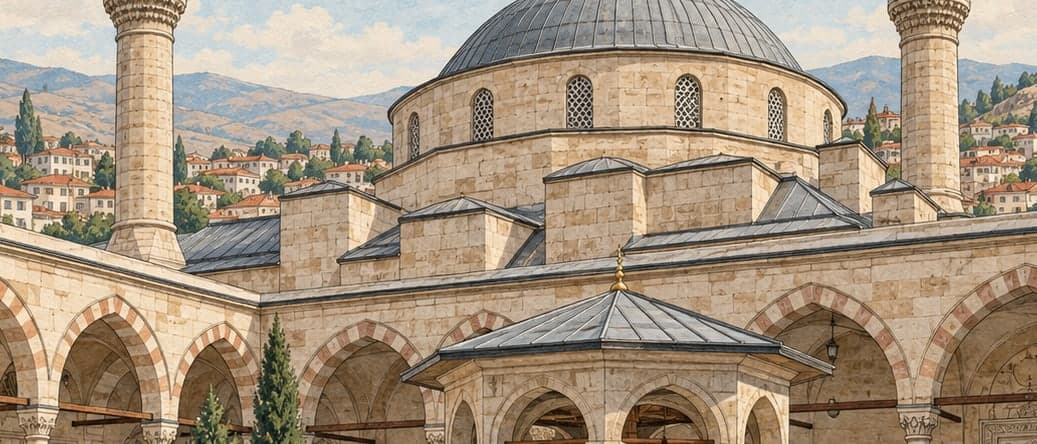
The Gök Medrese is 300 metres from the historic centre of Sivas and within walking distance of it. Sahip Ata Fahrettin Ali, one of the great viziers of the Anatolian Seljuk state, had it built in 1271 by the architect Kaluyan, and it is the only one of its kind whose crown portal is of marble. The facade runs 31.25 metres, and the portal takes up roughly a third of it.
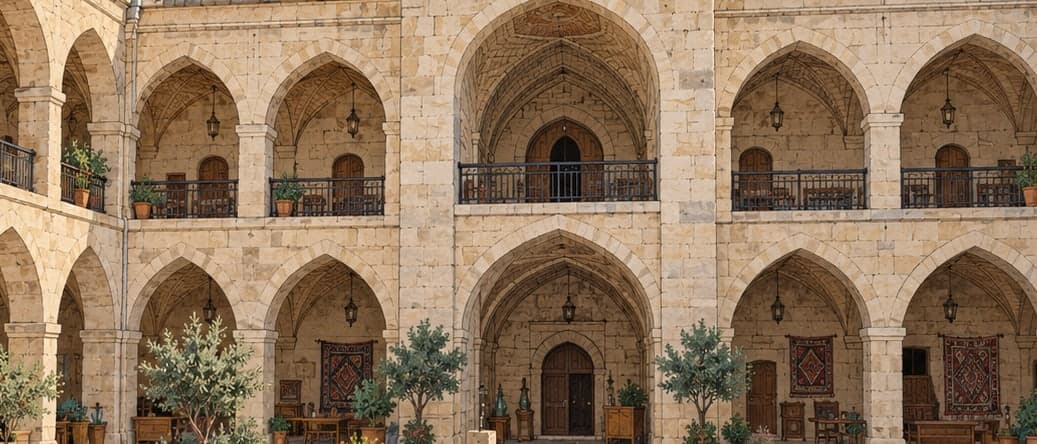
The name explains itself once you are inside. The building has an open court, two storeys and four eyvans; the turquoise tiles of the mesjid to the right of the entrance eyvan and of the two side eyvans were striking enough to earn the whole medrese the epithet gok, meaning sky-blue. Elsewhere in the fabric there are twelve kinds of animal head, stars, and the largest tree-of-life motif found on any Seljuk building.
That tree is worth looking up at. The provincial directorate describes it as a symbol loaded with abstract meanings — the pillar of the universe, and of peace, abundance, learning, wisdom, power and eternity — and notes that because it stood for the protecting power of the state it is also called the state tree, as well as the sacred, golden or paradise tree.
Astronomy was taught here alongside the religious sciences. Restoration finished in 2021, and the building now serves as the Gök Medrese Waqf Museum. In 2014 it was placed on UNESCO's Tentative List of World Heritage under the heading of the Anatolian Seljuk medreses, together with the other major Seljuk medreses of Sivas, Konya, Kayseri, Erzurum and Kırşehir.