Guide
This museum began as a teaching collection and nearly died as one. It was formed in 2011 out of what the university's archaeology department had dug at Seyitömer Höyük, with the aim of putting the Bronze Age of inner western Anatolia in front of people, and it owed its founding to the then head of department, Prof. Dr. A. Nejat Bilgen, and to the coal enterprise TKİ. Installed in a hall under the rectorate, it then sat unused for years and came close to shutting. Kütahya Dumlupınar University brought it back in 2021 and in March 2024 made it a unit of its museums coordinatorship.
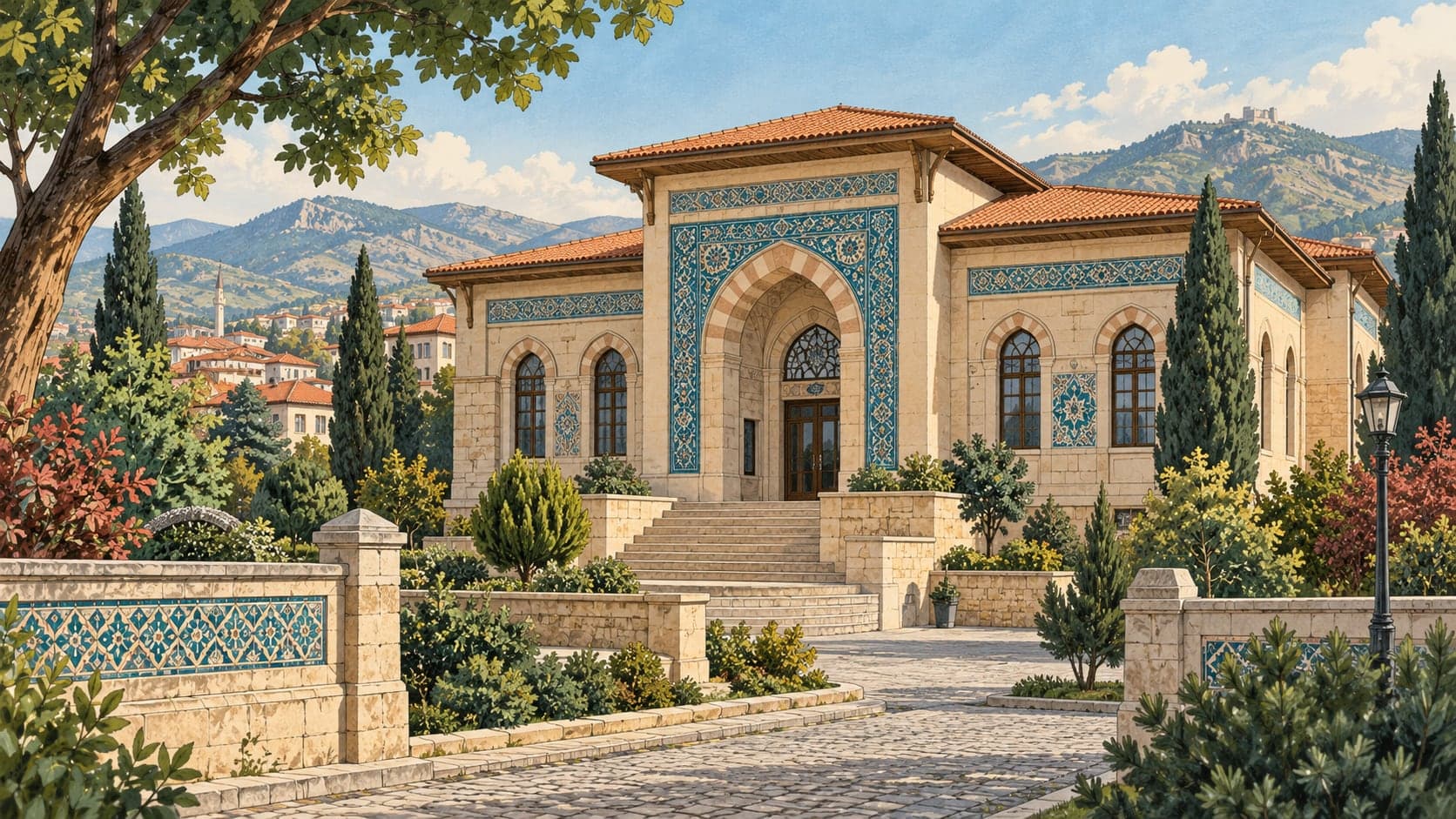
It reopened to visitors on 24 May 2023, under a three-year protocol signed that March with the Kütahya Museum Directorate, and now stands on the Evliya Çelebi campus beside the Bedesten, the busiest of the social buildings there. Indoors are two display halls and a multipurpose room, with stores, a restoration room and a desk for security and enquiries.
The collection runs from the Early Bronze Age to recent centuries and takes in terracotta, stone, Kütahya tilework and textiles, drawn from Seyitömer Höyük and from the districts of Altıntaş, Aslanapa, Simav, Gediz and Tavşanlı. As the museum counted them in July 2024, 292 pieces were on show: 179 in stone, 75 in terracotta, 28 tiles and 10 textiles. One display reconstructs a Roman sarcophagus burial found at the village of Nusret, north-east of the city, using the finds from it.
The stone was too heavy and too plentiful for the rooms, so the garden was laid out as an open-air gallery — grave stelae, altars, statue bases, sarcophagi, architectural blocks, column shafts, capitals and bases. Each piece was collected from villages and districts around Kütahya with the permission of the museum directorate and the ministry and moved under its supervision, then set on precast concrete plinths with stainless-painted iron supports, over layers of sand and stone that drain rain and snowmelt away and keep the stone off bare earth. One group is deliberately shown as it was found rather than as it was made: ancient blocks from the village of Kureyşler that a later age had built into a fountain are displayed still in that second use. Labels explain the pieces indoors and out.
Visit status for this record: open to visitors.