Guide
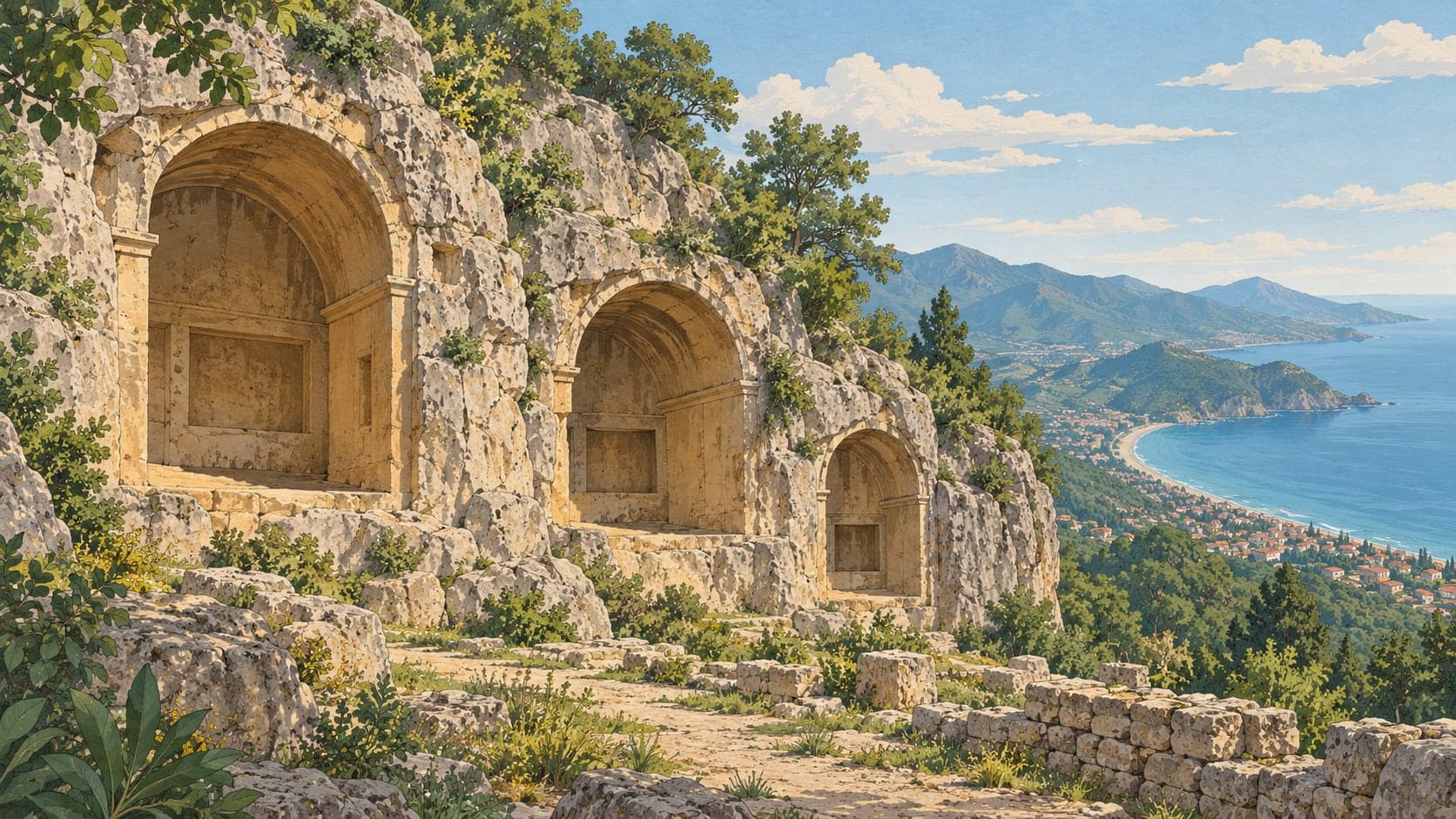
The rock tombs of Tikenlice, also known as Dikenlice, lie within the bounds of that settlement in the Gürgentepe district of Ordu. The place is today a rural quarter, and because its name appears in some sources as Dikenlice the tombs are known under both names.
There are fifteen tombs in all. They stand south of the settlement, at the place called Türbe Önü and known locally as the caves. Each was cut with careful workmanship into a single rock; they have one chamber and a plain appearance. In 2002 the site was declared a first-degree archaeological protected area by the regional conservation board at Samsun.
The first tomb lies west of a hazelnut orchard. Its rectangular chamber is entered from the north through an opening close to oval; both the entrance and the chamber have been damaged.
The second tomb has a rectangular chamber standing about 2.50 metres above the ground, with a square entrance on the north and a rosette carved directly above that opening. The third is likewise rectangular, about a metre high, with a square entrance on the north.
The fourth tomb is entered through a square opening on its eastern face, with small columns at the sides of the entrance carrying a triangular pediment above it; inside the chamber stands a column rising from a rectangular base.
The fifth tomb is about a metre high, with a triangular pediment above its rectangular entrance and two rosettes carved, one in the pediment and one above it; the walls of the rectangular chamber are rounded at the corners.
The sixth has a rectangular chamber with a square entrance cut so that it projects outward, a triangular pediment above it and a rosette carved at the top of that pediment; inside, the ceiling has the look of a barrel vault. The seventh is entered from its south-eastern face through a rectangular opening, with the ground in front partly levelled to form a step, and its walls are likewise rounded to give the ceiling the appearance of a vault. The eighth has a rectangular chamber entered through a square opening on the south-eastern face.