Guide
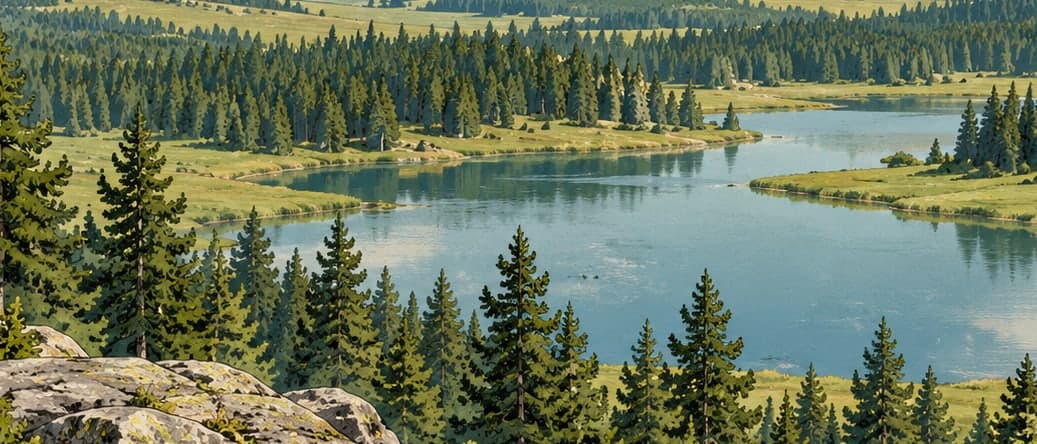
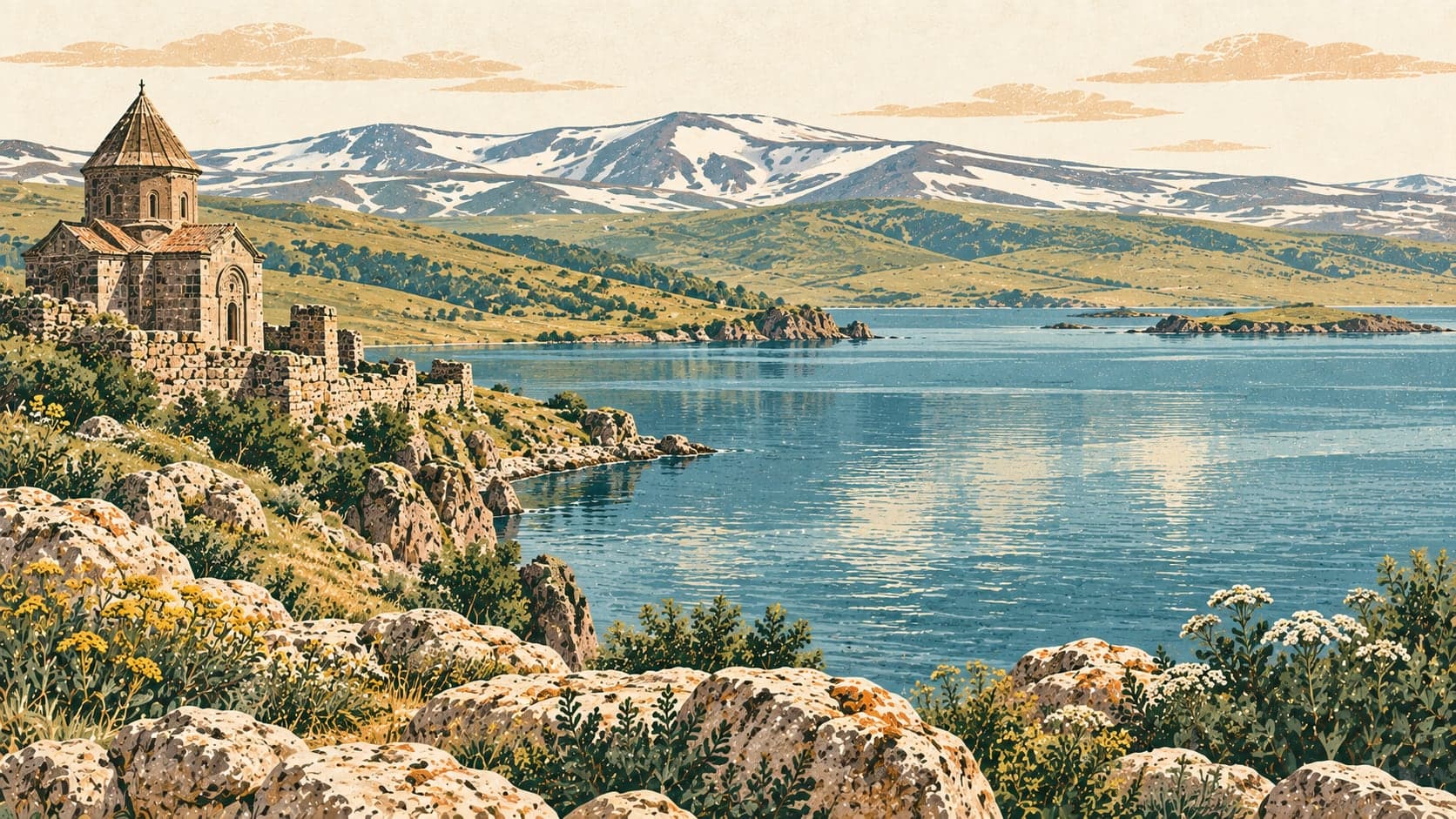
Çıldır Gölü covers 123 square kilometres, which makes it the largest freshwater lake and the second largest lake of eastern Anatolia. It lies 1,959 metres above sea level, reaches forty-two metres at its deepest, and runs about sixty kilometres round.
It is a natural barrier lake formed together by a lava flow and a cone of debris. Many streams and springs feed it, and its only outflow is the Telek stream, a branch of the Arpaçay, on the Armenian border to the north-west. Its largest island lies beside the ruins of Akçakale. Little vegetation has grown up around the lake, but the pastures ringing it carry intensive stock-raising.
Fishing is possible in all four seasons and is an important source of income for local people. In winter the lake freezes and fish are taken by breaking through the thick ice. The most important species caught is the mirror carp. In dry seasons the level of the lake falls quickly and the reed beds the carp need for breeding narrow; the source also records that uncontrolled fishing by many fishermen, in breach of the rules, is affecting fish stocks.
Marsh and wet meadows separated by a bank lie only at the north-west of the lake. The country around it is generally pasture, and the harsh regional climate does not allow farming.
The source sets out several concerns. The diversion tunnels built by the state hydraulic works to feed the lake may both carry the pollution load of other basins into it and dry out meadows that matter a great deal for stock-raising; the northern diversion, not yet finished, may seriously affect the grass yield of the Karaçay plain, one of the most important meadows of Çıldır. The source also points to the harm done by agricultural chemicals used on the lake and the farmland around it — fertiliser high in nitrogen in particular — applied without care and without regard for the ecological and climatic conditions of the region. No extreme pollution is observed in the lake, though domestic pollution is rising. Growing human pressure on the islands is affecting the species that use them for breeding, and with the tourism of recent years that pressure has increased and tourist facilities have begun to be built; the source holds that the hotel planned here should be reconsidered.
The basin of the lake is separated by a relatively narrow natural barrier, two to three kilometres wide, from the Çıldır plain, which lies about two hundred metres below the level of the lake.