Guide
The record here is for the necropolis, but the Governorship of Bursa's account describes the ancient city as a whole rather than the burial ground on its own, so what follows is the city. Gölyazı is one of Bursa's richest ancient settlements, built on a deep peninsula reaching into Lake Uluabat, with a history going back to the 6th century BC. Its ancient name was Apollonia ad Rhyndacum, after the Rhyndacus — today's Orhaneli Çayı or Kocaçay. Apollo was the light god of the ancient world, and nine cities named Apollonia are known to have been founded in Anatolia; this one was distinguished from the others by adding the name of the river rising near Aizanoi that feeds Lake Uluabat.
The city grew under Rome and gained mostly religious buildings under Byzantium. Continuous archaeological excavation has never been carried out here, and a good deal of what is known has instead come from studying coins found on the site: in the 1st century BC Apollonia was striking coins with a crayfish in relief, and large numbers of Byzantine imperial coins have also turned up. After the victory at Dimboz in 1303, Osman Gazi took the lands of the lord of Kite — modern Ürünlü — and opened the Gölyazı region to the Turks.
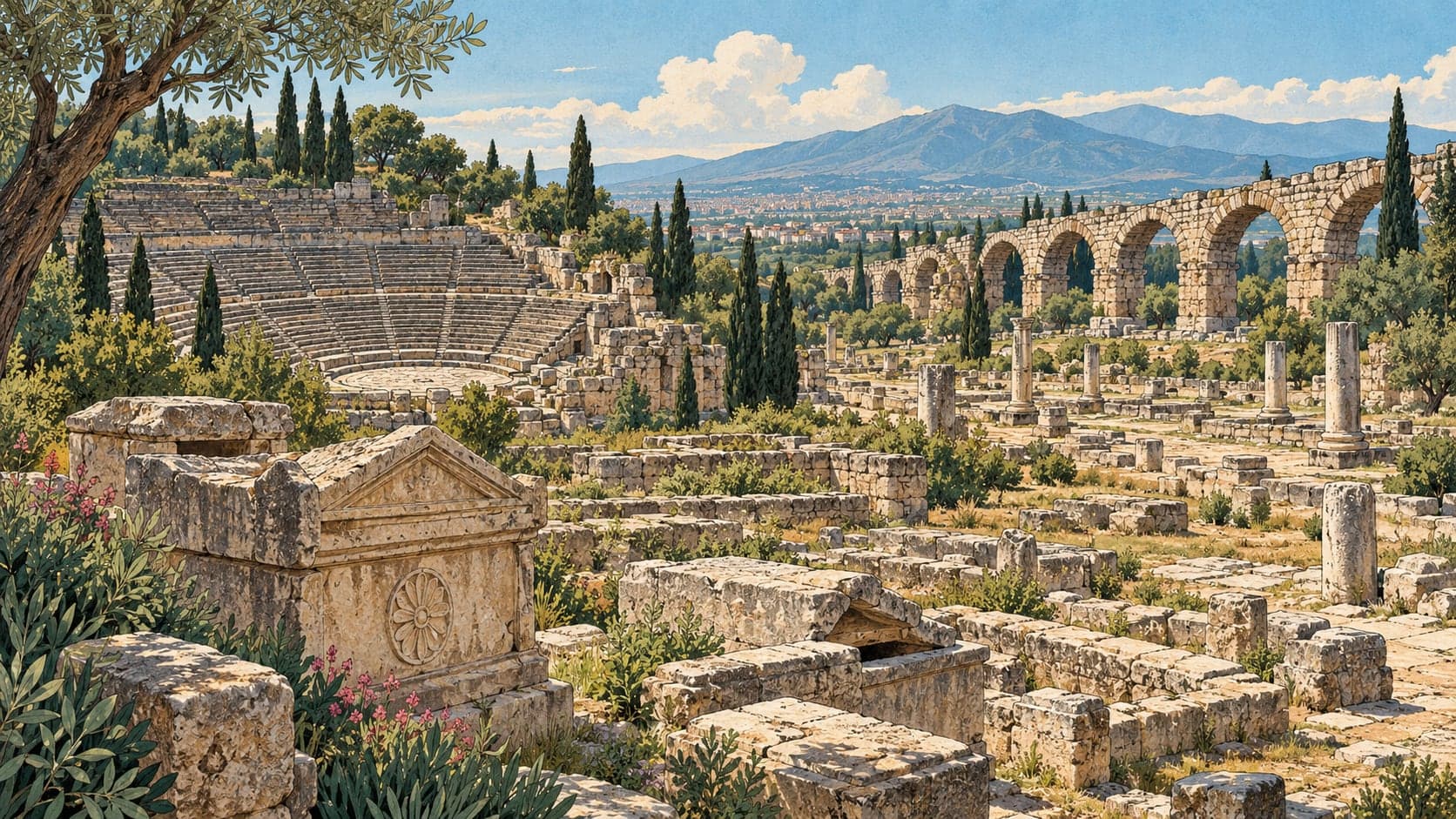
The remains are spread across the peninsula and the lake. On the islands of Alyos and Manastır stand Byzantine-period ruins. There is a structure locally called Deliktaş, thought to be an aqueduct, and the ruins of an ancient fortress known as Taş Kapı. On Kız Adası lie the remains of a temple of Apollo. Around the peninsula run stretches of wall, and there are the remains of an ancient theatre, the church of Hagios Georgios built by the Greek community living here in the 19th century, and the church of the monastery of Hagios Konstantinos on Manastır Adası. The whole area is protected as a designated site, and it also holds a mosque and a bath whose date of construction is unknown.
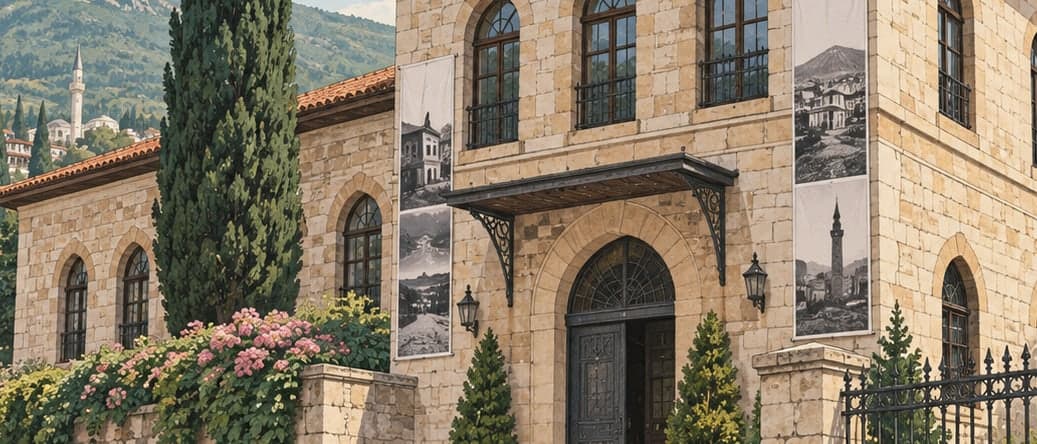
At the head of the bridge joining Gölyazı to the mainland stands a plane tree 750 years old, under special protection and known as the weeping plane because on certain days of the week a reddish liquid runs from its trunk; the source offers no explanation for it. The village itself carries the joint history of Turks and Greeks: an old Greek village where the two communities lived together under the Ottomans with Greeks in the majority, it is now home mainly to people who came from Thessaloniki in the population exchange of 1924. Its people live from farming, fishing and tourism, and pike, carp and a small fish the villagers call feki are caught in the lake.
Gölyazı is 42 kilometres from Bursa. Driving from Bursa towards İzmir, turn south at the 37th kilometre; about five kilometres after Lake Uluabat comes into view you will see the Gölyazı sign, and turning left there a road lined with olive trees runs five kilometres to the village entrance. Coming the other way, from İzmir, the turning is on the right some 25 to 30 kilometres after the lake appears.