Guide
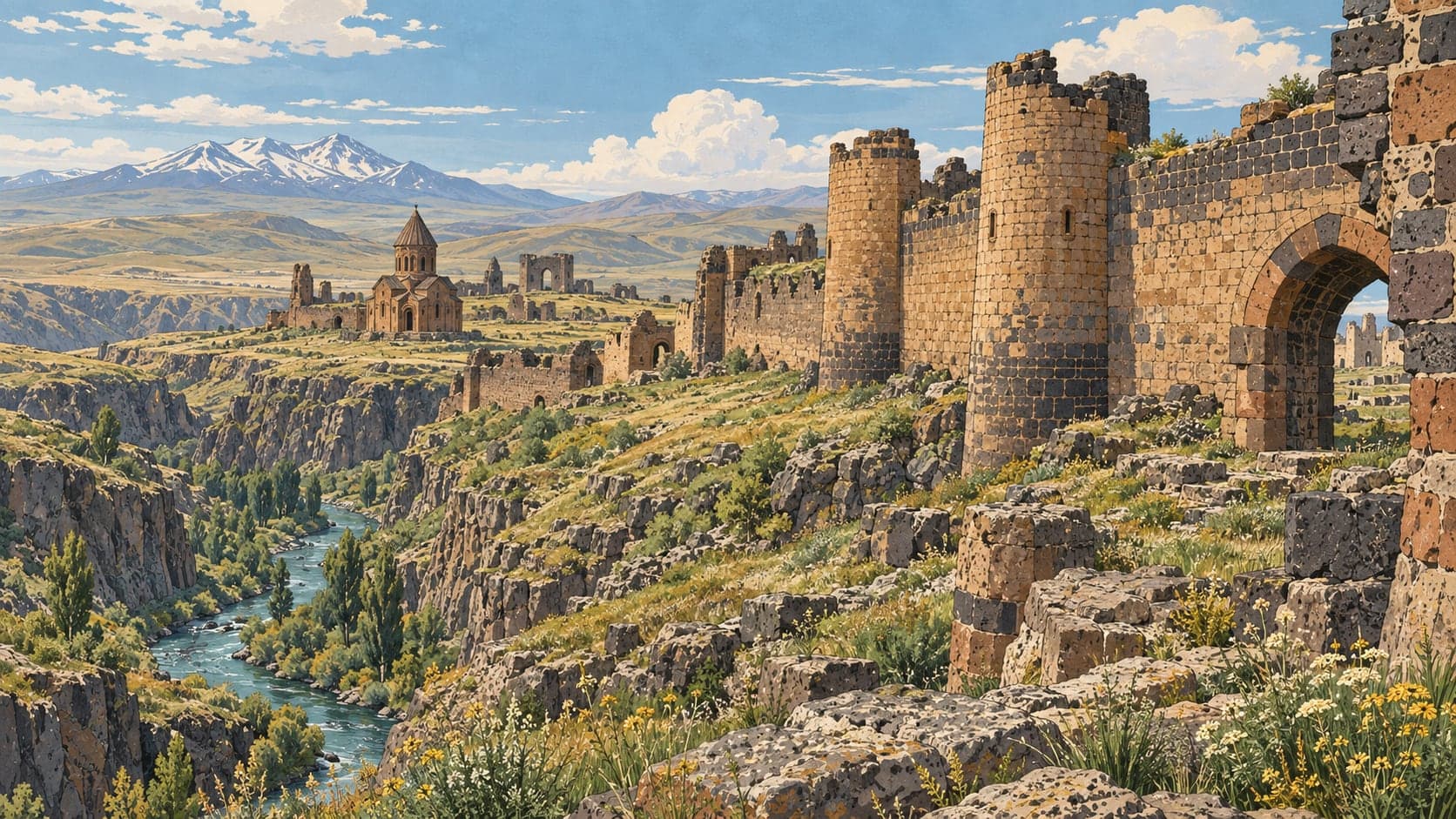
The walls that close Ani on the north run 4.5 kilometres and were built roughly as a triangle to fit the ground they stand on. A significant part of what is visible was built under the Bagratid king Ashot III (953–977); a second line was added around the city under Smbat II (977–988), and the final system dates from after the Seljuk conquest.
The landscape decided how heavily each side was built. Steep rock rising above the Bostanlar stream to the west and the Mığmığ to the east gave natural protection, so the walls there are a single line and simply made. Facing the Yavşan and Cirit flats, where an attack was likely to come from, they were built in two or three lines instead.
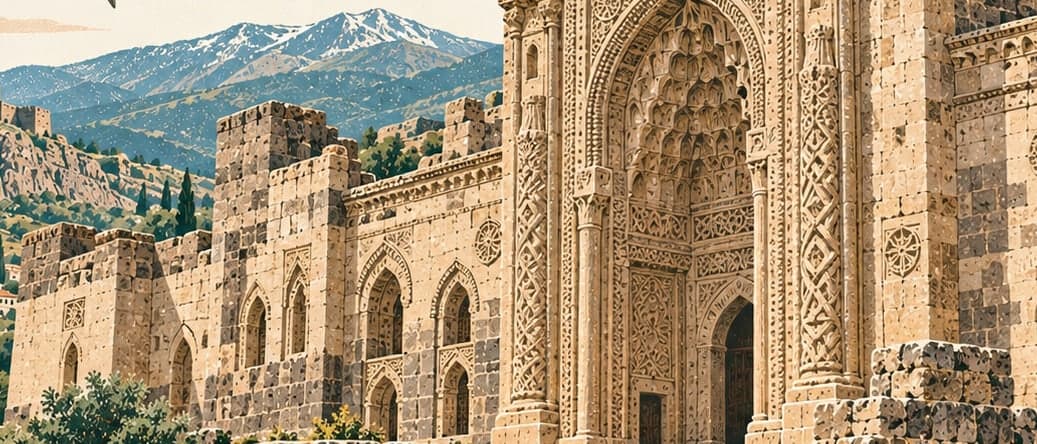
Of the double walls, the outer is lower than the inner, has suffered more damage, and is strengthened at intervals by semicircular and rectangular towers. Supporting towers built between the two lines served as stores for provisions and grain, to hold out through a long siege. The gates of the inner and outer walls were deliberately not aligned with one another, which makes entry harder, and in places a wide, deep ditch strengthens the defence further.
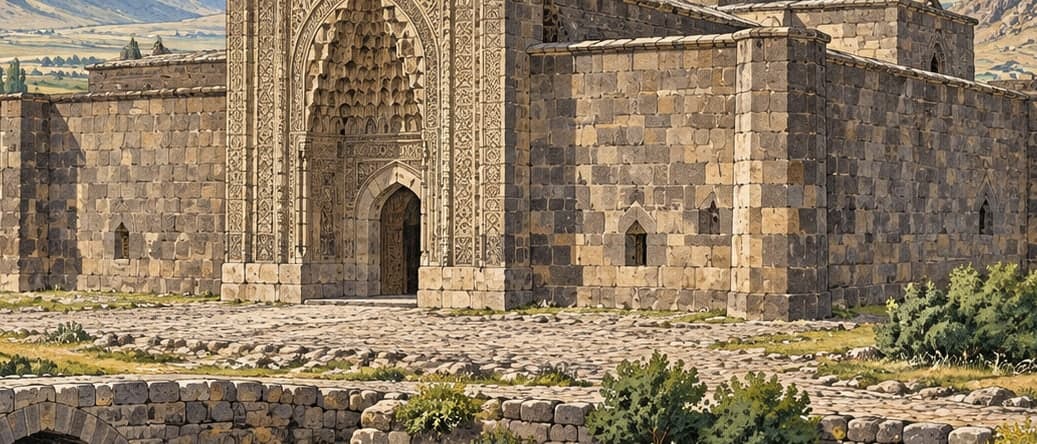
There are seven gates, and the most impressive is the Lion Gate, probably the main entrance in earlier times as well; it takes its name from the lion relief high on the wall between the inner towers. Yellow, grey and near-red stone was used in the masonry, and the inner and outer faces carry cross motifs, reliefs of lions and snakes, inscriptions and tile decoration.